Longevity and Maintenance Compared
How long each type lasts and how much upkeep each needs are important factors for a Russiaville homeowner. Here is the honest comparison.
Standing Seam's Longevity
Standing seam tends to be the longer-lasting type, with its hidden fasteners and robust construction often giving it a longer service life and helping it reach the upper end of metal's decades-long lifespan. The lack of face penetrations supports its longevity, since there are fewer points to wear or fail. For a homeowner wanting the longest-lasting metal roof, standing seam is typically the choice.
Exposed-Fastener Lifespan
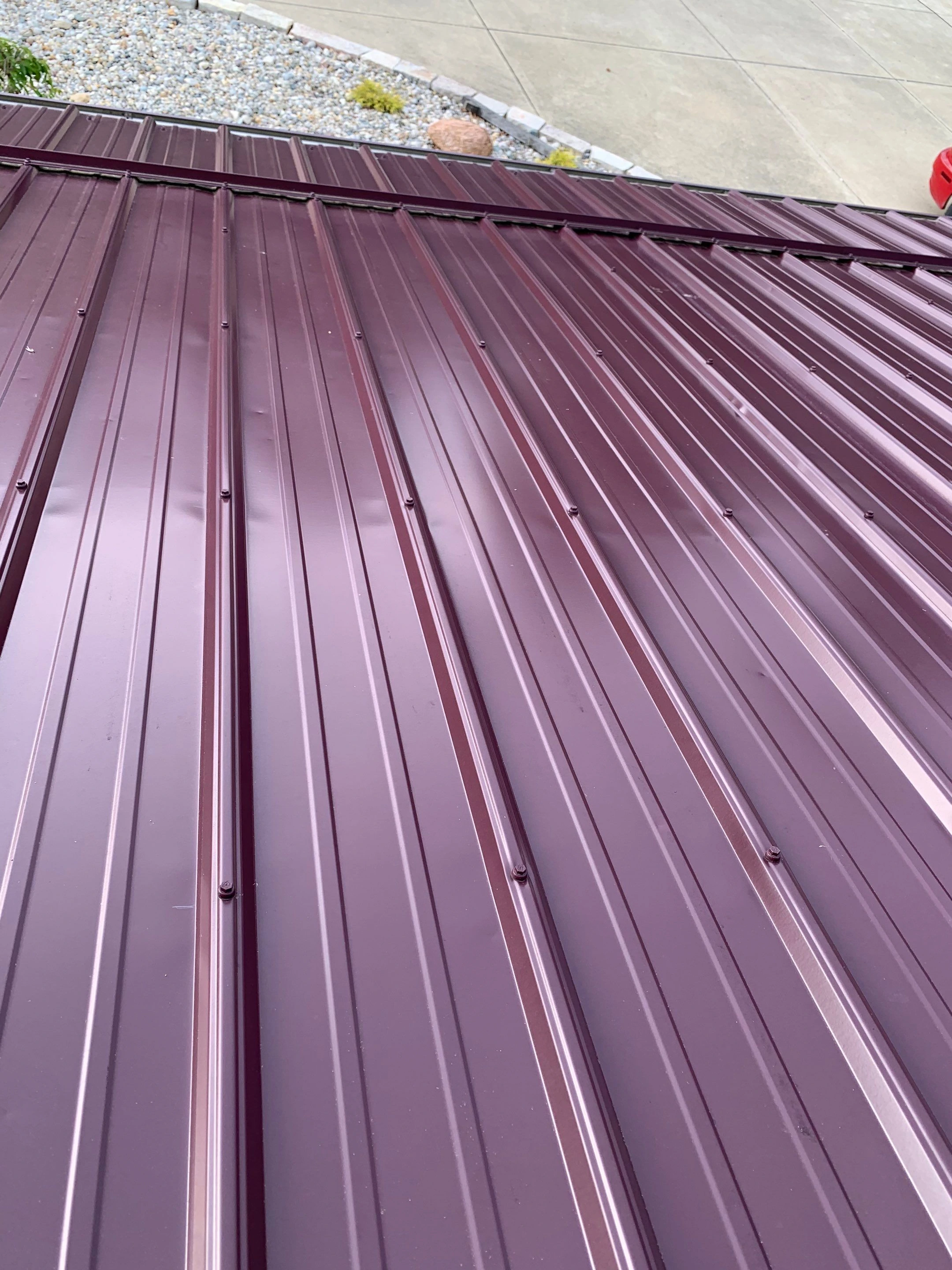
Exposed-fastener roofs also last a long time, well beyond asphalt, but their lifespan can be somewhat shorter than standing seam's, partly because the exposed screws and washers wear and may need attention over the decades. With good maintenance, an exposed-fastener roof serves for many years, but it generally does not match standing seam's longevity. It remains a durable, long-lasting option, just not the longest.
Standing Seam's Low Maintenance
Standing seam is very low-maintenance, needing little beyond the basic care any metal roof benefits from, clearing debris, occasional inspection, since it has no exposed fasteners to monitor and replace. This minimal upkeep is part of its appeal, a roof you can largely forget about for decades. For a homeowner valuing low hassle, standing seam delivers.
Exposed-Fastener Upkeep
Exposed-fastener roofs need somewhat more attention over their life, chiefly periodic checking of the screws and washers and replacing any that have loosened or worn before they leak. This is manageable maintenance, not burdensome, but it is more than standing seam requires. Factoring in this ongoing fastener attention is part of choosing exposed-fastener. It is the trade-off for the lower upfront cost.
The Longevity and Maintenance Takeaway
Standing seam generally lasts longer and needs less maintenance thanks to its hidden fasteners, while exposed-fastener roofs are durable and long-lasting but typically a bit shorter-lived and require periodic fastener attention. For maximum longevity and minimal upkeep, standing seam leads, while exposed-fastener offers good durability at lower cost with manageable maintenance. Both serve well for decades. The difference favors standing seam here.
Longevity and Upkeep, in Short
Standing seam typically lasts longer and needs less maintenance thanks to its hidden fasteners, while exposed-fastener roofs are durable but a bit shorter-lived and need periodic fastener checks. Standing seam leads on longevity and low upkeep.
It also helps Russiaville homeowners to understand the single most consequential difference between the two types, the fasteners, because nearly everything else flows from it. In standing seam, the fasteners and clips that hold the panels down are concealed beneath the raised, interlocking seams, so nothing penetrates the visible surface of the panel. In exposed-fastener roofing, the panels are held down by screws driven directly through their face, each sealed by a rubber washer, and those screws are visible across the surface. This one design choice ripples through the whole comparison. It determines appearance, hidden fasteners give the clean, premium look while exposed screws give the utilitarian one. It determines leak resistance, because fastener penetrations through a panel face are a classic eventual leak point on metal roofs, and standing seam simply does not have them, while exposed-fastener roofs depend on those face screws staying tight and their washers staying sound over decades of the metal expanding and contracting. And it largely determines maintenance and longevity, since standing seam has no fasteners to monitor and replace, while exposed-fastener roofs need their screws checked periodically and any that have loosened or whose washers have cracked replaced before they leak. None of this makes exposed-fastener a poor choice, it remains durable, affordable, and entirely suitable for the right applications, but it does mean that a homeowner choosing exposed-fastener should go in understanding the trade-offs, and one choosing standing seam should understand what the premium is buying. A contractor who installs both can lay all of this out clearly for your specific situation.
One point worth underlining for Russiaville homeowners is that the choice between standing seam and exposed-fastener is rarely about one type being good and the other bad, since both are legitimate metal roofs that share metal's core virtues of durability, long life relative to asphalt, fire resistance, and energy efficiency. The choice is really about matching the type to the building and to what you want from the roof. Standing seam is the premium option, and it earns that status through genuine advantages, its concealed fasteners give it a sleek, architectural appearance and, more importantly, eliminate the face penetrations that are a common eventual leak point, which in turn tends to give it longer life and lower maintenance. Those benefits make it the natural choice for a primary residence where appearance matters and where a homeowner wants the most worry-free, longest-lasting roof and is willing to pay a premium for it. Exposed-fastener roofing, on the other hand, is the practical, affordable option, and it is the sensible choice for a great many situations, outbuildings, barns, garages, agricultural structures, and budget-conscious projects, where its lower cost is a real advantage, its utilitarian appearance is entirely appropriate, and the periodic fastener maintenance it requires is a reasonable trade for the savings. The honest way to choose, then, is to be clear about the building and your goals and budget, get real quotes for both on your actual roof, and weigh the premium of standing seam against what it buys you for your particular situation.
It also helps Russiaville homeowners to understand the single most consequential difference between the two types, the fasteners, because nearly everything else flows from it. In standing seam, the fasteners and clips that hold the panels down are concealed beneath the raised, interlocking seams, so nothing penetrates the visible surface of the panel. In exposed-fastener roofing, the panels are held down by screws driven directly through their face, each sealed by a rubber washer, and those screws are visible across the surface. This one design choice ripples through the whole comparison. It determines appearance, hidden fasteners give the clean, premium look while exposed screws give the utilitarian one. It determines leak resistance, because fastener penetrations through a panel face are a classic eventual leak point on metal roofs, and standing seam simply does not have them, while exposed-fastener roofs depend on those face screws staying tight and their washers staying sound over decades of the metal expanding and contracting. And it largely determines maintenance and longevity, since standing seam has no fasteners to monitor and replace, while exposed-fastener roofs need their screws checked periodically and any that have loosened or whose washers have cracked replaced before they leak. None of this makes exposed-fastener a poor choice, it remains durable, affordable, and entirely suitable for the right applications, but it does mean that a homeowner choosing exposed-fastener should go in understanding the trade-offs, and one choosing standing seam should understand what the premium is buying. A contractor who installs both can lay all of this out clearly for your specific situation.
Choose a Long-Lasting Roof
Russiaville Metal Roofing installs both standing seam and exposed-fastener metal roofing across Russiaville and Howard County, built to last. Call {phone} for a free consultation on which type best fits your longevity expectations, maintenance preferences, and budget.